
CHICKEN
The Healthy White Meat
Ethics
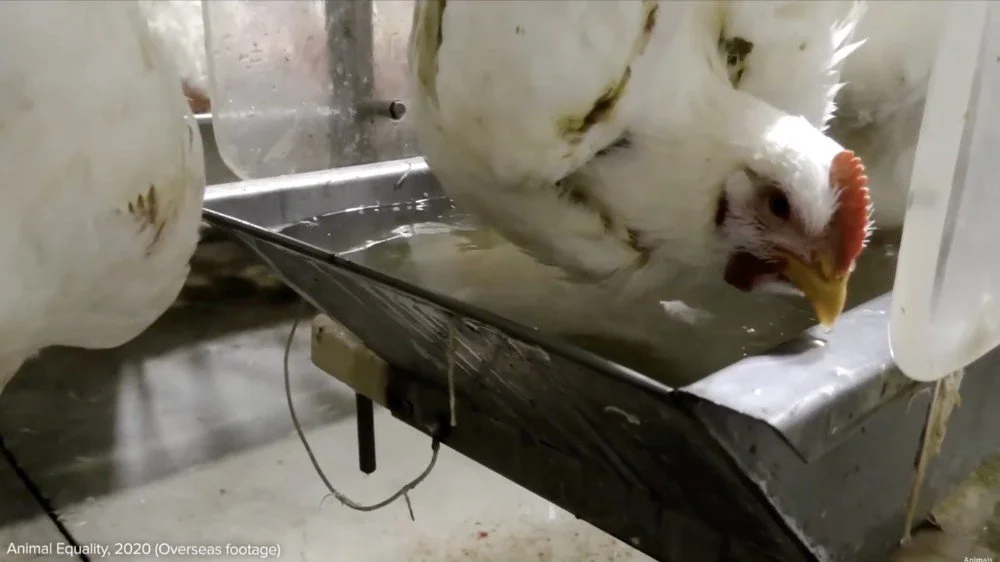
Chickens are slaughtered at 7 weeks old.¹
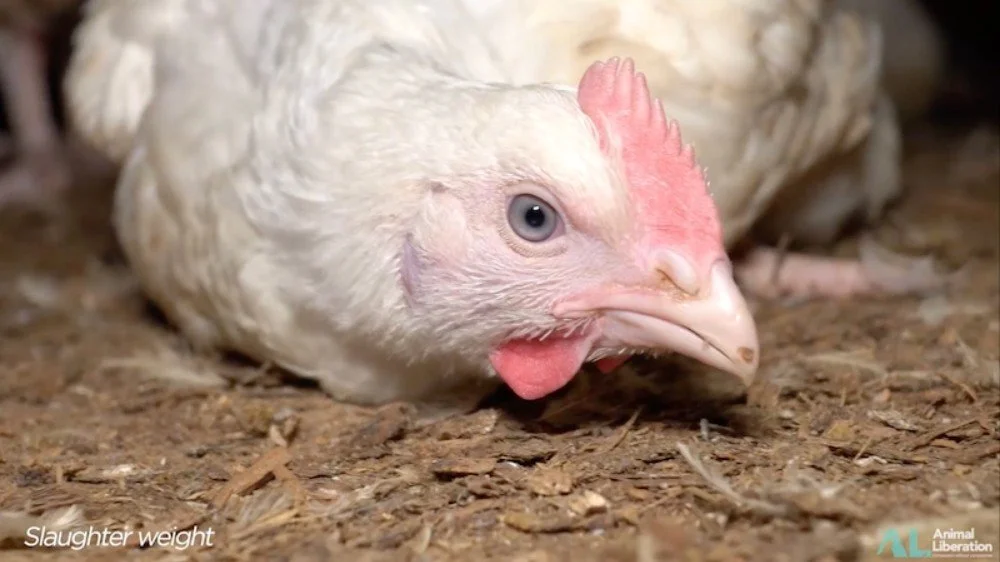
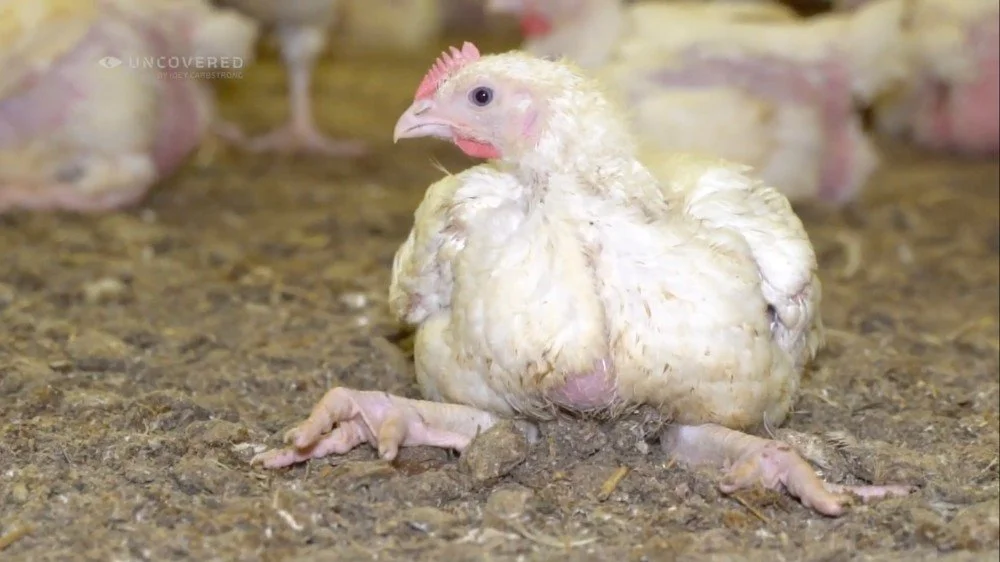
Grow rapidly so many collapse under their own weight.²
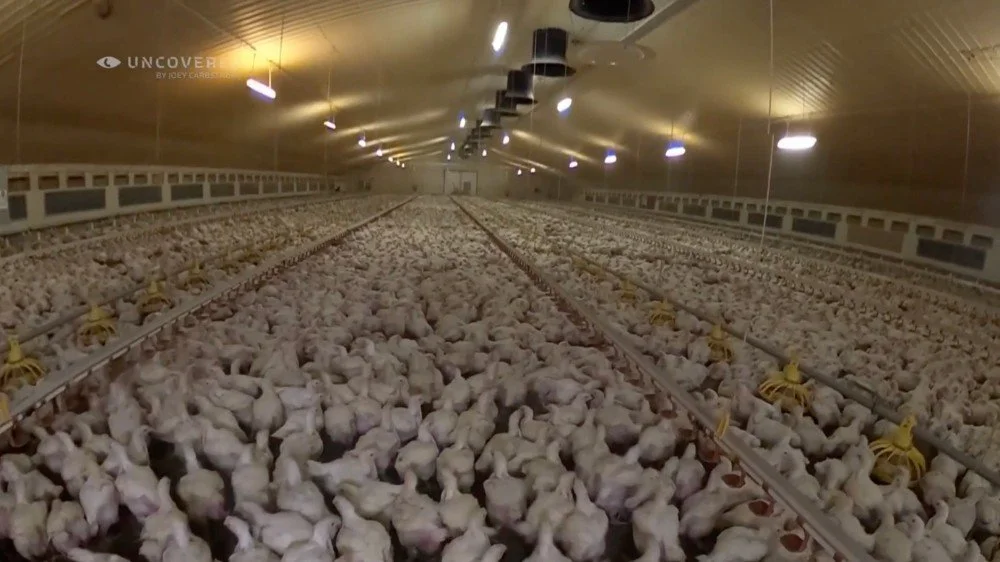
Billions raised in windowless sheds.³
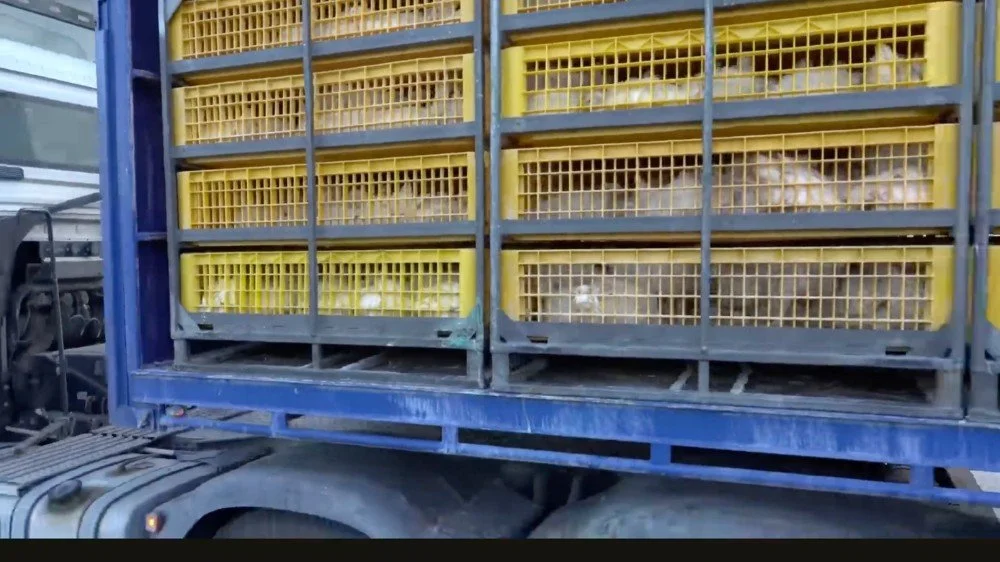
Millions die during transport from injuries or suffocation.⁴
Some remain conscious during slaughter.⁵
Health
Most raw chicken is contaminated with pathogenic bacteria.⁶
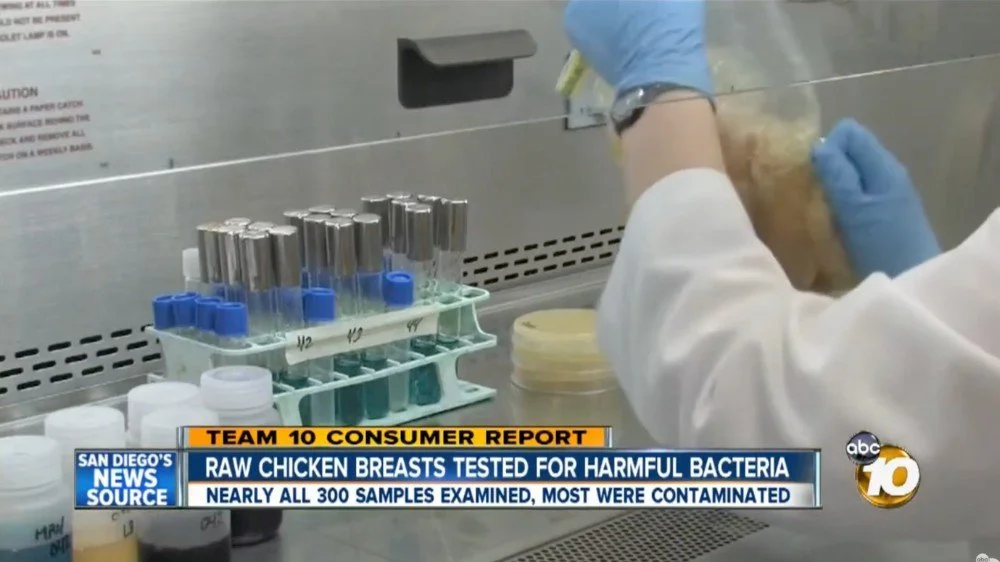
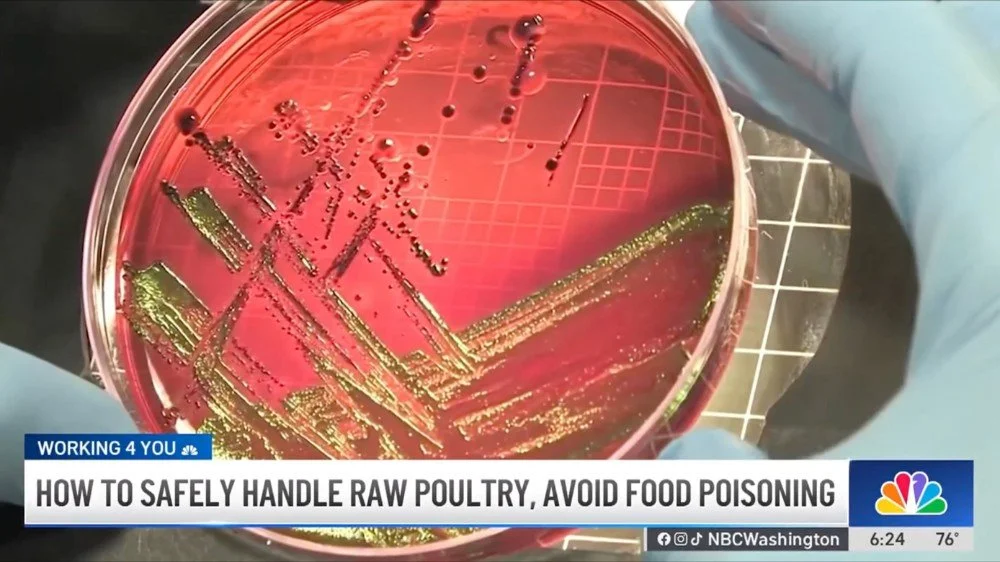
Chicken is a leading source of salmonella infections in the U.S.⁷
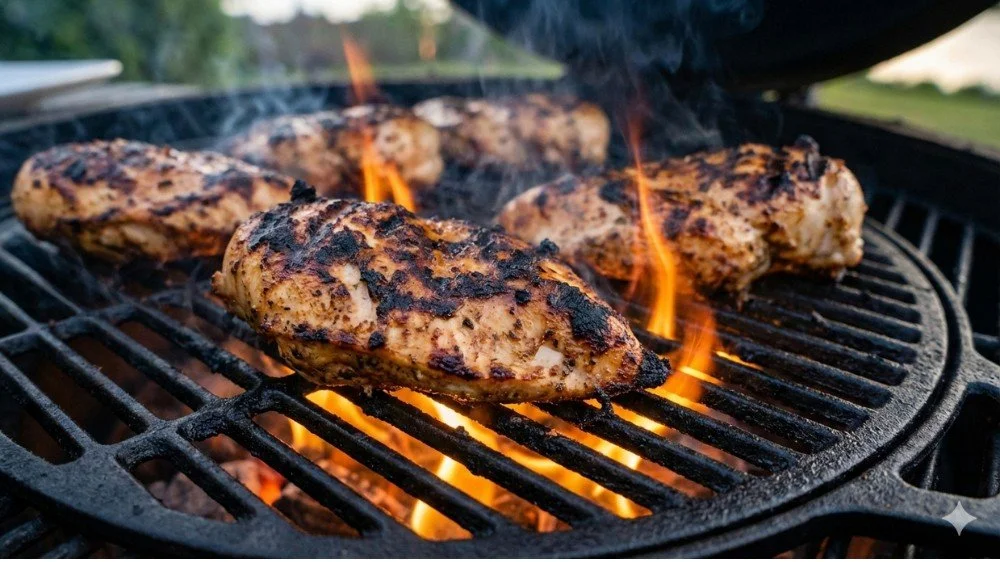
Charring chicken produces chemicals linked to cancer.⁸
Gemini Image
Environment
Millions of pounds of pollutants from chicken farms enter U.S. rivers each year.⁹

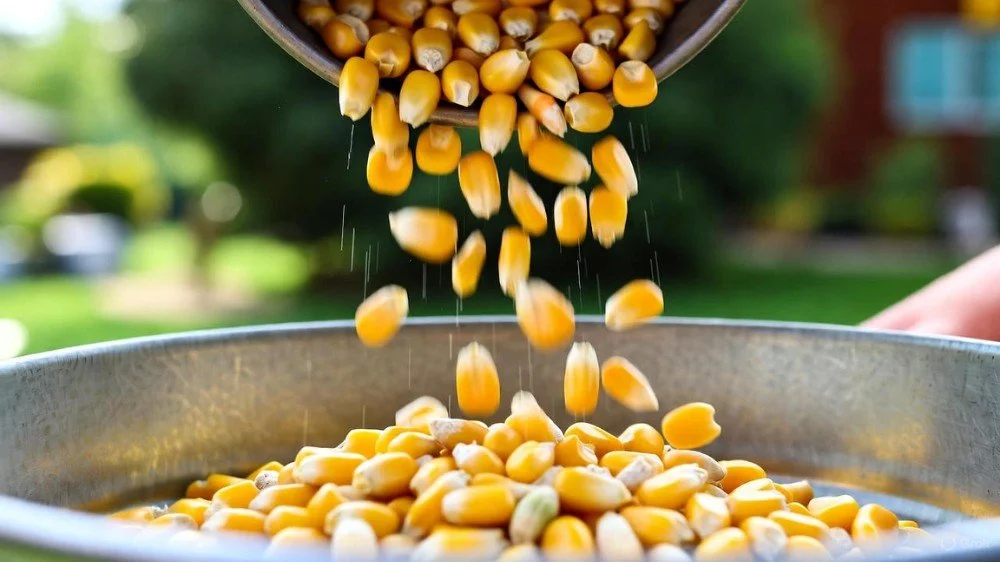
Consume grain that could feed over 600 million people each year.¹⁰
Grok Image
References
-
National Chicken Council. U.S. broiler performance. Washington, D.C.; 2024.
"2024 Market Age (average days) = 47.4" -
Lourenço-Silva MI, Norton AH III, Jacobs L. Fast growth rate is associated with musculoskeletal biomechanical imbalance and dorsal cranial myopathy in broiler chickens. PLoS One. 2025;20(9):e0332693.
"...fast-growing strains possess an underdeveloped musculoskeletal system, with tendons and bones that can be too weak to support their body weight. Their bone structure often cannot keep pace with the rapid muscle growth, leading to an imbalance that overloads the musculoskeletal system and negatively affect their body posture, known as musculoskeletal biomechanical imbalance." (Paragraph 3)
-
Billions
United States Department of Agriculture, National Agricultural Statistics Service. Poultry - Production and Value 2023 Summary. April 2024."The total number of broilers produced in 2024 was 9.33 billion, up 1 percent from 2023" (page 5)
Windowless Sheds
Measuring the impact of natural light on chicken production. Auburn University College of Agriculture. Published July 11, 2024"Most broiler houses today are lit by LED lighting with no windows and only limited sunlight streaming through ventilation fans, according to Linhoss." (Paragraph 4)
-
Lambooij E, et al. Animal Stress and Welfare During Transport and Slaughtering: An Outline for Future Policies. 2024. PMC
"Analysis of publicly available data shows that about 20 million chickens, 330,000 pigs, and 166,000 cattle were dead on arrival or died in lairage." (Section 3, Paragraph 2)
-
Mendelsohn MK, Hasty AL, Eklund R, Saucier JR. Meat quality of broiler chickens processed using electrical and controlled atmosphere stunning systems. Poult Sci. 2023;102(2):102377. doi:10.1016/j.poultsci.2022.102377.
"Currently, the most common method of stunning in the United States is electrical water-bath stunning (ES). According to industry experts, 95% of commercial broiler production utilizes this method (personal communication). However, research has shown evidence of distress for birds when ES was used (Boyd, 1994; Erasmus et al., 2010)."
-
Chicken Breast Contamination
Consumer Reports. Potentially harmful bacteria found on 97 percent of chicken breasts tested. Consumer Reports. December 2013.“Consumer Reports found bacteria that could make consumers sick on nearly all of the 316 raw chicken breasts purchased at retail nationwide." (97 Percent Of Chicken Breasts Tested)
...contamination rates for six different bacteria – enterococcus (79.8 percent), E.coli (65.2 percent), campylobacter (43 percent), klebsiella pneumonia (13.6 percent), salmonella (10.8 percent), and staphylococcus aureus (9.2 percent). It also evaluated every bacterium for antibiotic resistance and found that about half the chicken samples harbored at least one multidrug-resistant bacteria." (Paragraph 2)
Consistent Findings
Consumer Reports. The Quest for Safer Chicken — Food Safety. Consumer Reports. August 4, 2021.“Consumer Reports testing has consistently found potentially harmful bacteria, including salmonella and campylobacter, on raw chicken, showing that contamination remains a widespread problem.
-
U.S. Department of Agriculture. USDA proposes new policy to reduce Salmonella in raw poultry products. Press Release. July 29, 2024.
"Food is the leading source of Salmonella infections and poultry is among the leading sources of foodborne Salmonella illnesses. FSIS estimates that there are 125,000 chicken-associated and almost 43,000 turkey-associated foodborne Salmonella illnesses per year." (Paragraph 2)
-
Item National Cancer Institute. Chemicals in meat cooked at high temperatures and cancer risk. NCI; 2020.
"Heterocyclic amines (HCAs) and polycyclic aromatic hydrocarbons (PAHs) are chemicals formed when muscle meat, including beef, pork, fish, or poultry, is cooked using high-temperature methods, such as pan frying or grilling directly over an open flame. In laboratory experiments, HCAs and PAHs have been found to be mutagenic—that is, they cause changes in DNA that may increase the risk of cancer." (Paragraph 1)
-
Goswami O, Woods S. Waste Deep: How Tyson Foods Pollutes US Waterways and Which States Bear the Brunt. Union of Concerned Scientists; 2024.
"Our analysis found that over five years, Tyson's meat processing plants dumped 371.72 million pounds of pollutants into waterways across the United States, with over half of the pollutant load concentrated in just three states: Nebraska, Illinois, and Missouri." (Paragraph 4)
-
Human Grain Recommendation
U.S. Department of Health and Human Services; U.S. Department of Agriculture. Dietary Guidelines for Americans, 2015-2020.“The recommended amount of grains in the Healthy U.S.-Style Eating Pattern at the 2,000-calorie level is 6 ounce-equivalents per day." (Page 22)
Feed Estimates
Feedstuffs. New animal feed consumption data released. Feedstuffs. Published online“Excluding harvested forages and roughages, the study found that in 2023, beef cattle consumed the most feed, at 76.7 million tons, followed by broilers at 61.5 million tons, hogs at 60.9 million tons...The report primarily examined over 70 unique feed ingredients used among the studied species, finding that, by weight, corn tops the list at 159.4 million tons, followed by soybean meal at 35.4 million tons, corn distillers dried grains at 32.6 million tons, wheat middlings at 5.6 million tons and canola meal at 5.2 million tons." (Paragraphs 3 & 4)
Calculation
One grain ounce-equivalent ≈ 28 g dry grain.
Per person per day: 6 × 28 g = 168 g
Per person per year: 168 g × 365 = 61.3 kg
For 600 million people: 61.3 kg × 600 million = 36.7 million metric tons of grain per year
Corn, soybean meal, and wheat middlings are all human-edible grains or derived from edible crops, so 600 million people is conservative. Assumes 60% of feed is human edible excluding harvested forages and roughages."
-
References include government, industry, and peer-reviewed sources. Some footage was filmed outside the U.S. but reflects standard industry practices. These images are the G-rated version. For the R-rated truth, watch this.