
PORK
Bacon Makes Everything Better
Ethics
Pigs are slaughtered at 6 months old—could live 27 years.¹
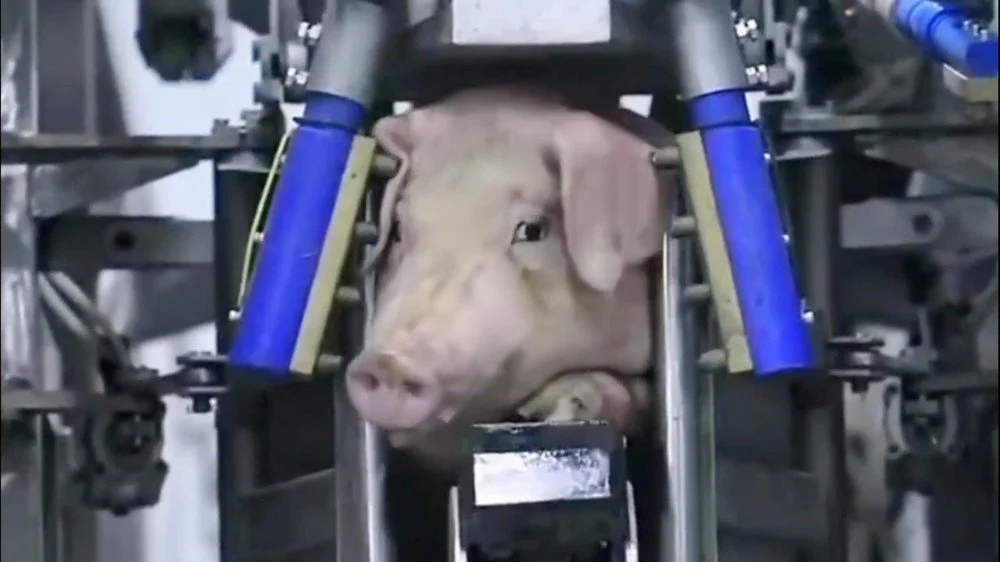
Mother pigs live trapped in crates too small to turn.²
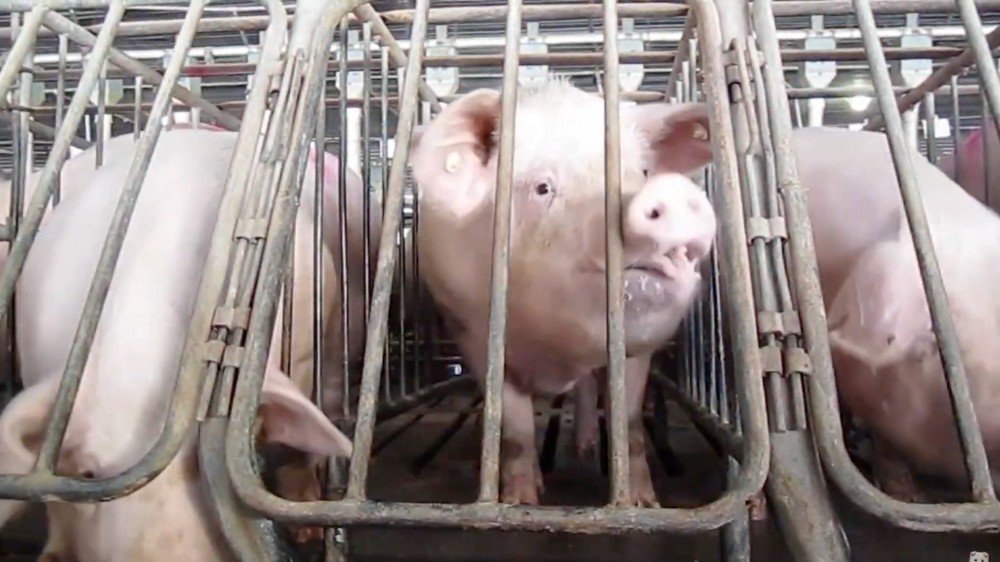
1 in 7 piglets dies primarily from being crushed by the mother or starving.³
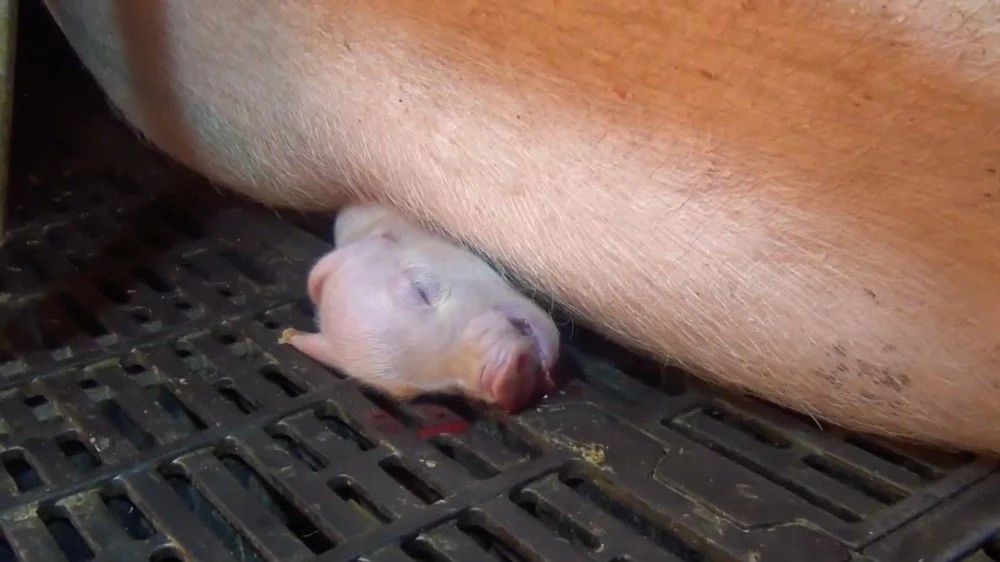
Piglets’ testicles and tails are cut off without anesthesia.⁴
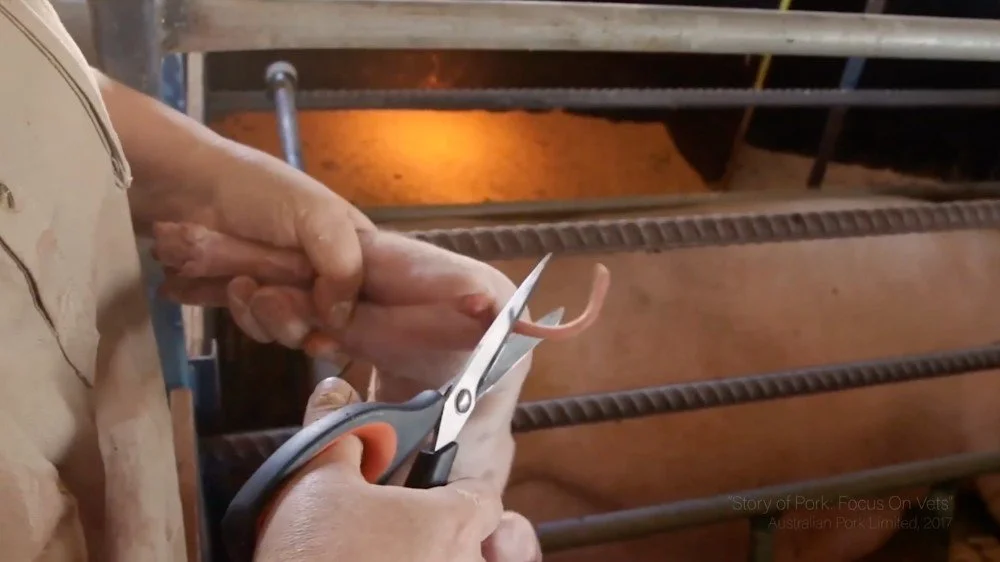
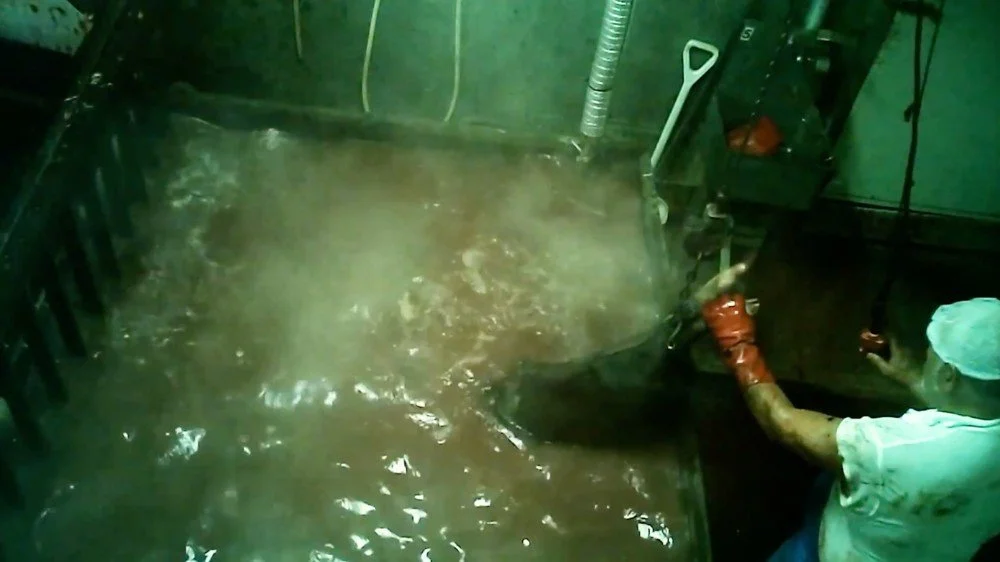
Some pigs are dropped in boiling water alive.⁵
Health
Salmonella contaminates ~10% of U.S. pork.⁶
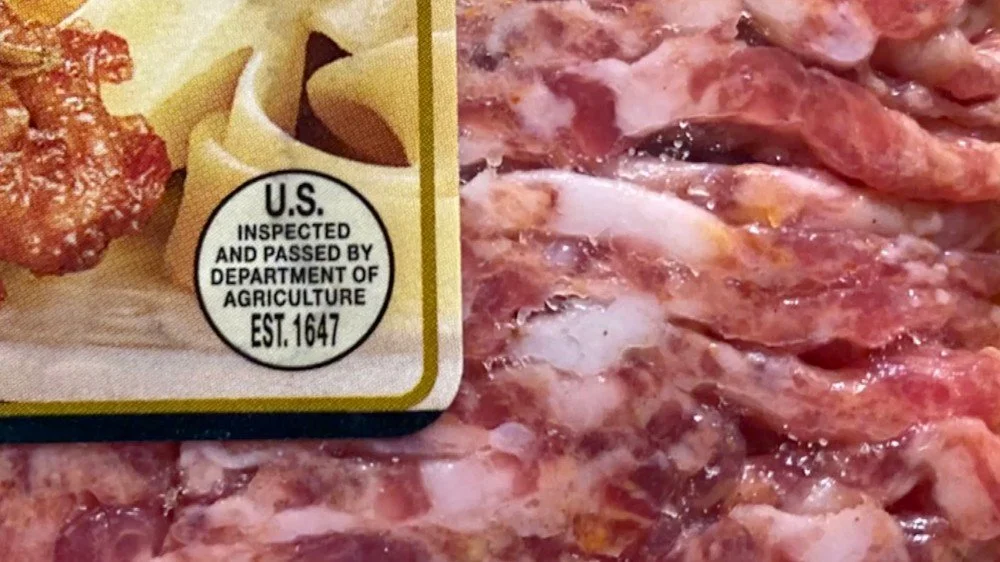
Processed pork is a Group 1 carcinogen, like tobacco.⁷
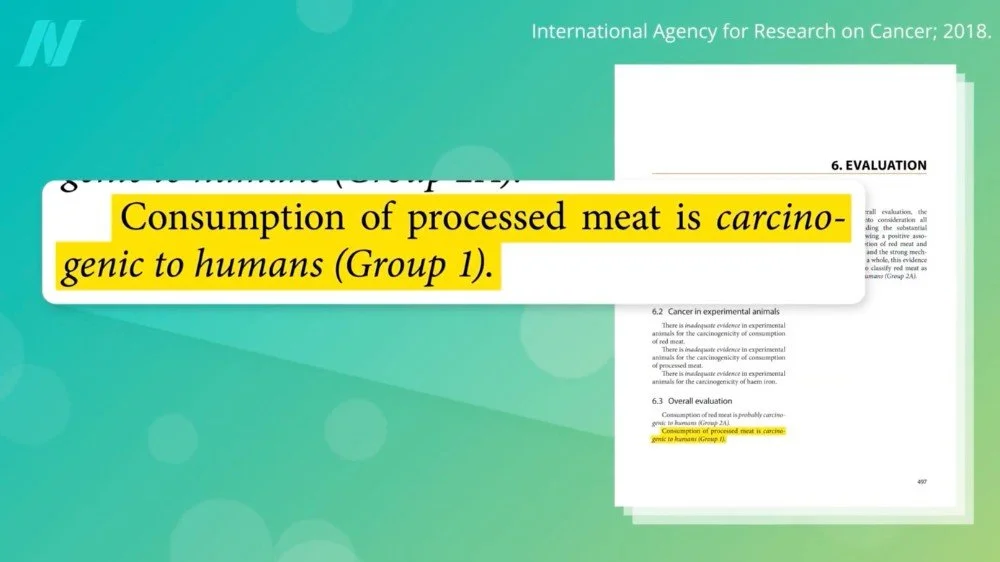
Unprocessed pork is classified as Group 2A carcinogen.⁸
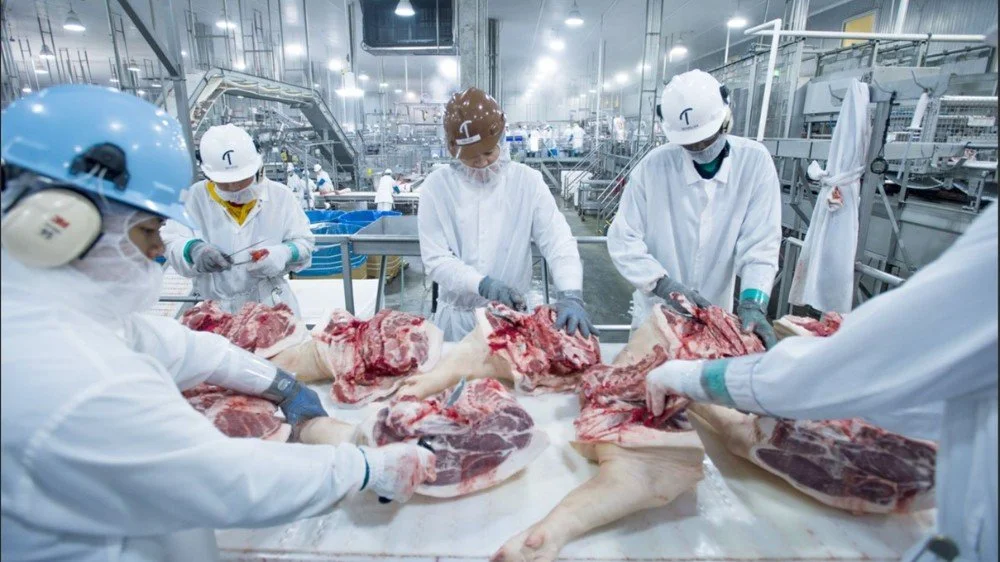
Environment
Pig farms fuel ammonia pollution, algae blooms, and groundwater contamination.⁹

Consume grain that could feed over 600 million people each year.¹⁰
Gemini Image
References
-
6-Month Slaughter Age
US Department of Agriculture, Economic Research Service. Hogs & Pork – Sector at a Glance. Washington, DC: US Department of Agriculture; 2024"In a farrow-to-finish operation, 22–26 weeks (or about 6 months, starting at birth) are required to grow a pig to slaughter weight." (Paragraph 8).
27 Year Lifespan
Molnar J, Fahnestock M, Elkins J, et al. Neoplasia in a domestic pig (Sus scrofa domesticus). Comp Med. 2019"In a farrow-to-finish operation, 22–26 weeks (or about 6 months, starting at birth) are required to grow a pig to slaughter weight." (Paragraph 8)."The average lifespan of most domestic pigs is 15 to 27 y, but most pigs are slaughtered before the age of 6 mo as sources of food."(Paragraph 6)
-
American Veterinary Medical Association. Gestation sow housing. Published September 2024.
"Sows in gestation stalls can stand-up and lie down, but are prevented from turning around and performing behaviors such as communal lying and movement to preferred micro-environments." (Page 1)
-
MetaFarms, Inc. and National Pork Board. Key performance indicators for large commercial swine farms in the U.S. achieving different levels of performance in 2021. In: VCE Publications. Virginia Tech; 2022. APSC-195.
Cause Of Death
"The number one cause of preweaning deaths is sows lying on pigs. Called maternal overlay, overlay, or crushing, this accounts for 48.1% of deaths. Other major causes of preweaning death include starvation (15.3% of deaths) and scours (13.3% of deaths)" (Paragraph 3)Mortality Rate
The reference notes that in 2021, the average pre-weaning death loss in large commercial U.S. swine farms (covering over 1.4 million sows) was 14.1% for the middle 50% of producers, which is approximately 1 in 7 piglets. Information is found in Table 1: Key performance indicators for large commercial swine farms in the U.S. achieving different levels of performance in 2021. -
Liu P, Wang M, Han Y, et al. Effects of piglet enrichment on sow skin lesions and behavior before and after tail docking and castration. Front Ethol. 2025;7:1607722.
"In the first few days of life, most piglets in commercial production undergo one or more painful husbandry procedures. These may include teeth clipping, tail docking, and/or castration. These procedures are often conducted without analgesic or anesthetic drug usage for pain relief, even though they are painful for the piglet..." (Introduction)
-
FSIS District 25 Manager Dr. Dawn Sprouls. Notice of Suspension, Swift Pork Company (Sept. 2, 2020).
"While walking adjacent to the bleed rail on the way to the livestock holding pen area, IPP [the inspector] heard hog vocalization, turned to the bleed rail and observed a conscious hog vocalizing while attempting to right itself. IPP motioned his hand towards the hog’s face as he got closer and observed eye blinking. This took place shortly before the incline to the scald tub. As IPP followed the hog up the incline, he observed two more vocalization and righting reflex episodes with the hog arching its head upwards towards its shoulders. As IPP went up the stairs to the scald tub, in an attempt to find someone to stop the chain, he heard another vocalization episode. Seconds later the hog went into the scald tub. " (Page 2)
-
US Department of Agriculture, Food Safety and Inspection Service. Pork Salmonella Performance Standards Risk Assessment. April 8, 2020–February 8, 2022. Washington, DC: USDA FSIS; 2022.
"On average, 30.3 percent of comminuted pork samples were Salmonella-positive. For pork cuts samples, an average of 9.3 percent were Salmonella-positive. Contamination tends to cluster among a limited number of establishments in this industry, particularly for pork cuts."
-
International Agency for Research on Cancer. IARC Monographs Vol 114: Evaluation of the Carcinogenicity of Red Meat and Processed Meat. 2018.
"Processed meat was classified as carcinogenic to humans (Group 1), based on sufficient evidence in humans that the consumption of processed meat causes colorectal cancer... Tobacco smoking and asbestos are also both classified as carcinogenic to humans (Group 1)."
(Page 1) -
National Cancer Institute. Red Meat and Processed Meat Consumption. Cancer Trends Progress Report. Published 2024
"The International Agency for Research on Cancer (IARC) classifies processed meat as a Group 1 carcinogen (meaning it is carcinogenic to humans), and red meat as a Group 2A carcinogen (meaning it is probably carcinogenic to humans). (Background section)
-
Glibert PM, Al-Mur BP, Al-Mutairi H. From hogs to HABs: impacts of industrial farming in the US on nitrogen and phosphorus and greenhouse gas pollution. Environ Res. 2020;188:109752.
"The waste from hog and dairy operations is mainly held in open lagoons that contribute to NH and greenhouse gas (CH and N O) emissions... Emissions of NH from animal waste in 2019 were estimated at >4,500,000 MT… reducing the growing waste from CAFO operations is essential if eutrophication and its effects on fresh and marine waters—namely hypoxia and harmful algal blooms (HABs)—are to be reduced." (Abstract)
-
Human Grain Recommendation
U.S. Department of Health and Human Services; U.S. Department of Agriculture. Dietary Guidelines for Americans, 2015-2020.“The recommended amount of grains in the Healthy U.S.-Style Eating Pattern at the 2,000-calorie level is 6 ounce-equivalents per day." (Page 22)
Feed Estimates
Feedstuffs. New animal feed consumption data released. Feedstuffs. Published online“Excluding harvested forages and roughages, the study found that in 2023, beef cattle consumed the most feed, at 76.7 million tons, followed by broilers at 61.5 million tons, hogs at 60.9 million tons...The report primarily examined over 70 unique feed ingredients used among the studied species, finding that, by weight, corn tops the list at 159.4 million tons, followed by soybean meal at 35.4 million tons, corn distillers dried grains at 32.6 million tons, wheat middlings at 5.6 million tons and canola meal at 5.2 million tons." (Paragraphs 3 & 4)
Calculation
One grain ounce-equivalent ≈ 28 g dry grain.
Per person per day: 6 × 28 g = 168 g
Per person per year: 168 g × 365 = 61.3 kg
For 600 million people: 61.3 kg × 600 million = 36.7 million metric tons of grain per year
Corn, soybean meal, and wheat middlings are all human-edible grains or derived from edible crops, so 600 million people is conservative. Assumes 60% of feed is human edible excluding harvested forages and roughages."
-
References include government, industry, and peer-reviewed sources. Some footage was filmed outside the U.S. but reflects standard industry practices. These images are the G-rated version. For the R-rated truth, watch this.