
DAIRY
Milk Does a Body Good
Ethics
Calves are taken from their mothers within hours of birth.¹
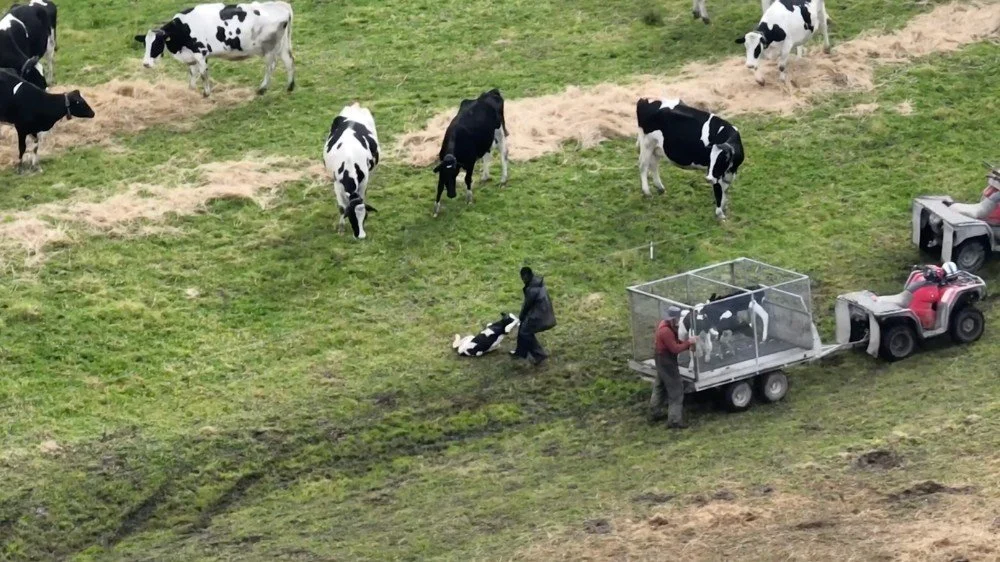
Mother cows wail for days after their babies are taken away.²
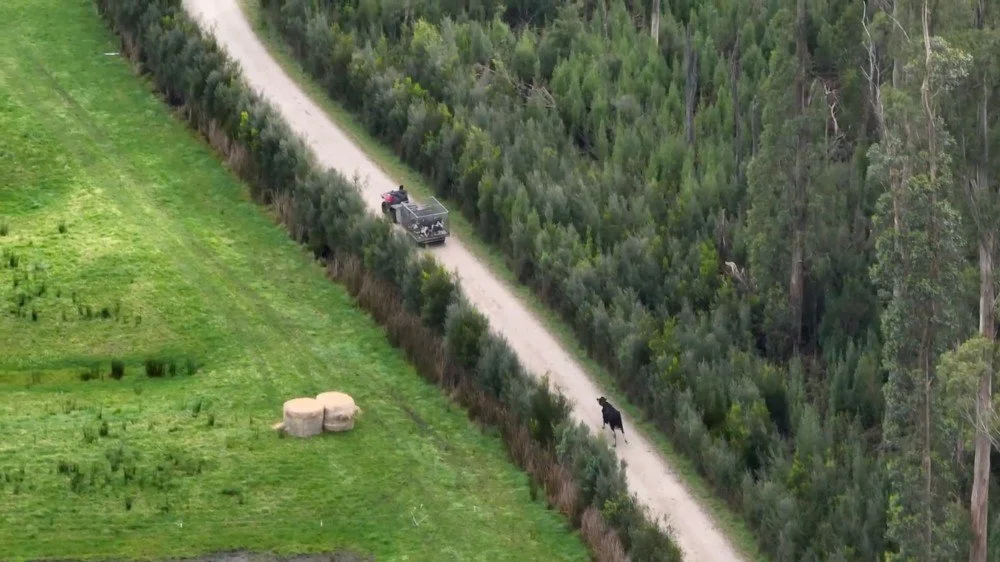
Some male calves are killed for veal before they’re 3 weeks old.³
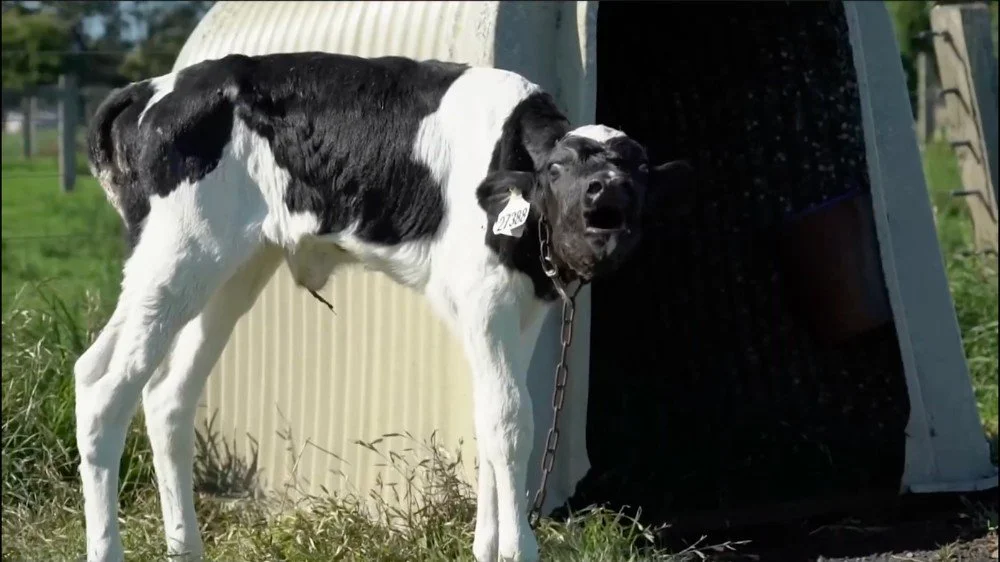
Cows are artificially impregnated each year to drive milk production.⁴

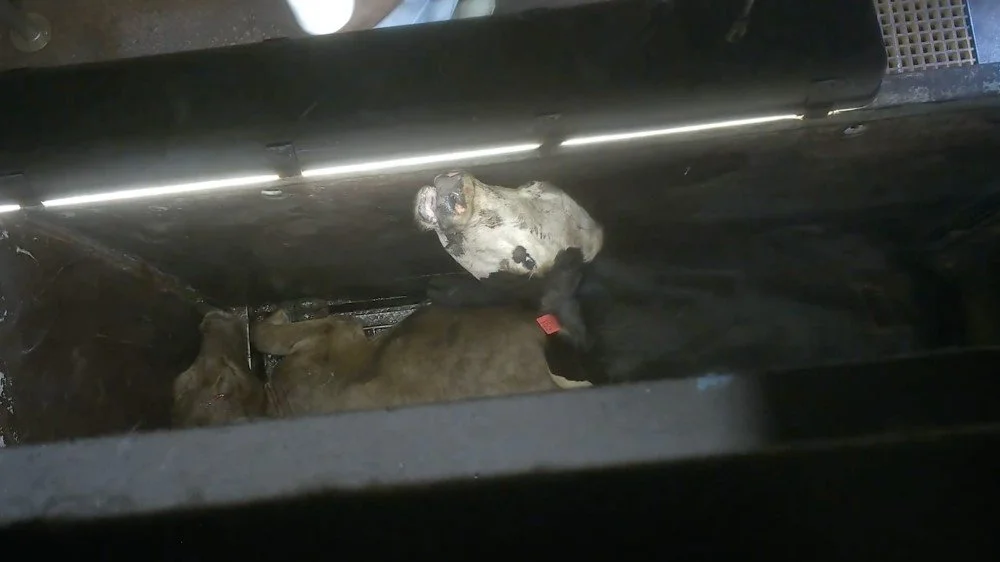
Cows are slaughtered at 5 years old—could live 20 years.⁵
Health
Over 65% of humans cannot digest lactose properly.⁶
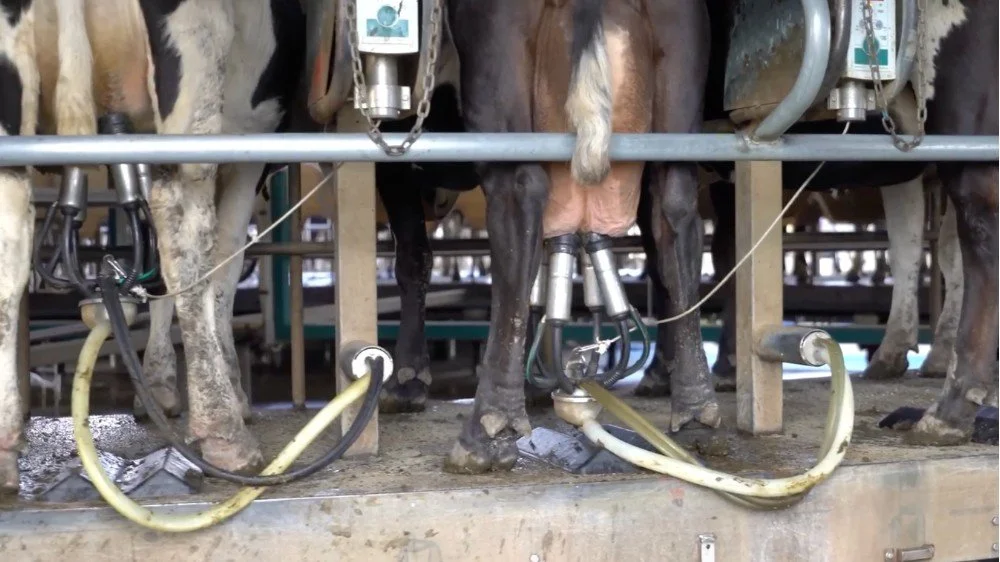
Milk consumption can cause acne and other skin problems.⁷

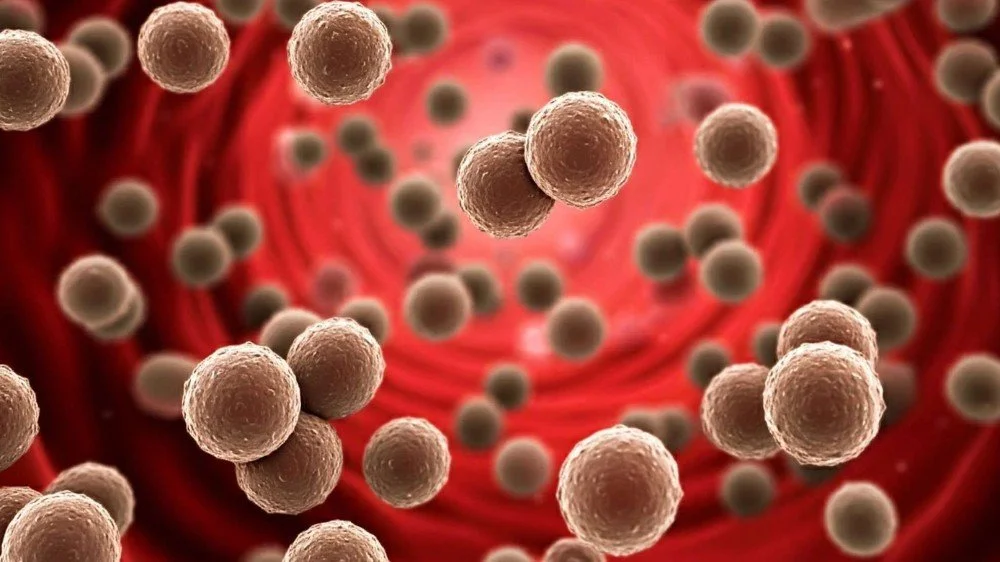
Saturated fat from butter raises LDL cholesterol.⁸
Environment
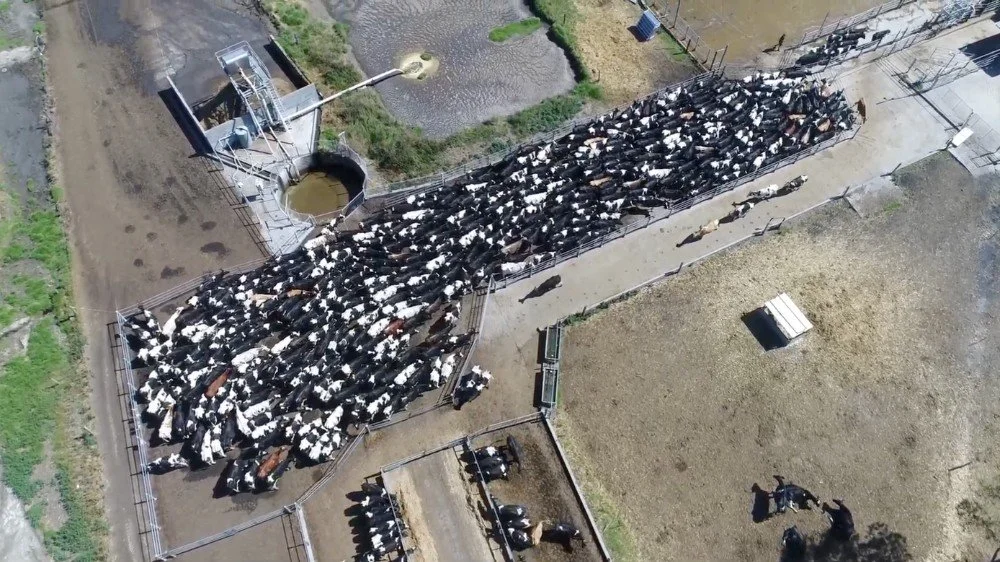
U.S. Dairy emits as much greenhouse gases as 30 million cars.⁹
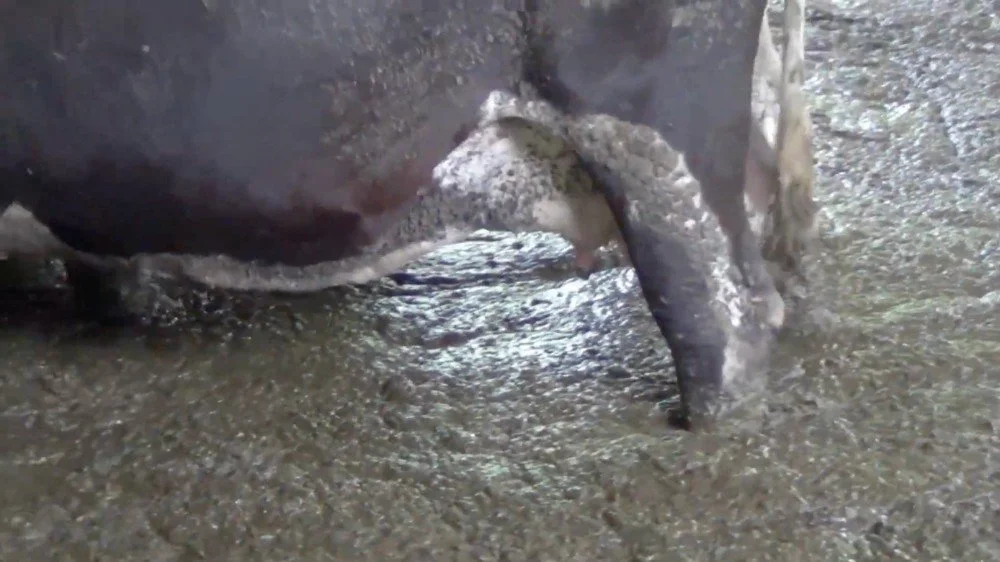
Large dairy farms produce more feces than major cities.¹⁰
References
-
United States Department of Agriculture. Dairy 2014: Dairy cattle management practices in the United States. USDA; 2016.
"The majority of all operations (56.2 percent) separated calves from their dam within 6 hours of birth." (Page 103)
-
Orihuela A, Galina CS. Effects of Separation of Cows and Calves on Reproductive Performance and Animal Welfare in Tropical Beef Cattle. Animals. 2019;9(5):223. doi:10.3390/ani9050223
"Some of the behavioral signs associated with stress reported in dairy cows … include vocalization for several days … following separation.” (Behavioral signs section)
-
King K, Pendell D, Godden S, et al. Perspectives on the Management of Surplus Dairy Calves in the United States and Canada. Frontiers in Veterinary Science. 2021;8:647248.
"Surplus calves are 95% male (1–3) and the sale of these animals generally provides only a small percentage of income for dairy producers. . . common market destinations include 'bob' veal (marketed <3 weeks of age) and special-fed veal (marketed at 5–6 months of age)"
-
Annual Impregnation
Gerrits WJJ, de Vries MJ, van Soest RJ, et al. Extending lactation length: consequences for cow, calf, and farmer. BMC Vet Res. 2022;18(1):379. doi:10.1186/s12917-022-03478-4.“Traditionally, a 1-yr calving interval is advised to farmers from an economical point of view, to realize a yearly peak in milk yield.” (Introduction)
Artificial Insemination
Oriol-Gastón D, Gómez-Izquierdo E, Fernández-Martínez I, Calsamiglia S. Revisiting the Timing of Insemination at Spontaneous Estrus in Dairy Cattle. Animals. 2022;12(24):3565.“Artificial insemination (AI), mainly in dairy cattle, revolutionized animal reproduction…AI in dairy cattle is considered the most important technological advancement in animal breeding.” (Introduction)
-
Müller U, Gross JJ, van Dorland HA, Bruckmaier RM, Albrecht C. Nutrition and immunology in dairy cows: Lessons learned and future perspectives. Anim Front. 2021
"Most dairy cows are sent to slaughter around 4 to 5 yr of age" (Paragraph 5)
Rault JL. Farm animal welfare in Australia: Standards and practices. Anim Front. 2020
"Depending on the breed, cattle are generally raised for either meat or dairy production with a maximum lifespan recorded at around 20 years, though anecdotal evidence suggests Texas Longhorn cattle can live over 30 years" (Cows-Paragraph 1)
-
National Institute of Diabetes and Digestive and Kidney Diseases. Lactose Intolerance: Definition & Facts
"While most infants can digest lactose, many people begin to develop lactose malabsorption—a reduced ability to digest lactose—after infancy. Experts estimate that about 68 percent of the world’s population has lactose malabsorption." (Paragraph 6)
-
Acne
Juhl CR, Bergholdt HKM, Miller IM, Jemec GBE, Kanters JK, Ellervik C. Dairy intake and acne vulgaris: a systematic review and meta-analysis of 78,529 children, adolescents, and young adults. Nutrients. 2018;10(8):E1049. Published August 9, 2018."In conclusion, any dairy, such as milk, yogurt, and cheese, was associated with an increased OR for acne in individuals aged 7–30 years." (Page 1)
Excema
Hughes A, Linder M, Kim K, et al. Underlying immune mechanisms involved in cow's milk-induced hypersensitivity reactions manifesting as atopic dermatitis. Pediatr Allergy Immunol. 2022;33(S27):e13812. Published online August 2, 2022.For example, many cow's milk hypersensitivity reactions result from exposure... and ultimately lead to varying symptoms such as atopic dermatitis, rashes, gastrointestinal bloating, diarrhea, and urticaria." (Introduction) "Atopic dermatitis" is the medical term for eczema.
-
Hooper L, Martin N, Abdelhamid A, et al. Reduction in saturated fat intake for cardiovascular disease. Cochrane Database Syst Rev. 2020;8:CD011737.
"tightly controlled metabolic ward studies … show that dietary saturated fats, when compared to unsaturated fatty acids, significantly increase blood cholesterol levels.”
-
Greenhouse Gases From U.S. Dairy
Thoma G, Naranjo C. Spatially resolved greenhouse gas emissions of U.S. milk production in 2020. Environ Sci Technol. 2025;59(1):475-484."U.S. raw milk production in 2020 generated 138.88 million tonnes of CO2e," (Abstract)
Average Passanger Vehicle Emissions
US Environmental Protection Agency. Greenhouse Gas Emissions from a Typical Passenger Vehicle. Updated January 2024.“A typical passenger vehicle emits about 4.6 metric tons of carbon dioxide per year."
Calculations
Total Dairy Emissions (138.88 million tonnes CO2e) ÷ Average Car Emissions (4.6 tonnes CO2e per car) = 30.19 million carsNote
Dairy emissions are largely methane (CH4), which is much more potent than CO2 but stays in the atmosphere for a shorter time. The study uses $CO2e (CO2 equivalent) to normalize these different gases so they can be compared to car exhaust. -
Dairy Cow Fecal Weight
American Society of Agricultural and Biological Engineers. ASABE Standards D384.2: Manure Production and Characteristics. ASABE; updated 2017.Lactating dairy cow manure of 150lbs/day (Table 1b)
5.3.6 Urine Volume – Lactating cow regression equations: UE Milk 0.114 BW 0.016 MF 97.709 MTP 353.280 CCP 62.036– 16.389 = 60lbs/day of urine
150lb/day of manure - 60lbs/day of urine = ≈ 90 lb/day fecal matter wet weight
Human Fecal Weight
Tilley E, Lüthi C, Morel A, et al. The Characterization of Feces and Urine: A Review of the Literature to Inform Advanced Treatment Technology. Water. 2014;6(7):2053-2079.Median human fecal wet mass ≈ 0.28 lb/day, supporting the conservative 0.5 lb/day estimate used. (Table 12)
Calculation
Dairy cow feces: 90 lb/day × 10,000 cows = 900,000 lb/day.
Human feces: 0.5 lb/day/person.
Ratio: 900,000 ÷ 0.5 = 1,800,000 human equivalents.
U.S. city of 1.8 million people is greater than the population of Philadelphia or Dallas.
-
References include government, industry, and peer-reviewed sources. Some footage was filmed outside the U.S. but reflects standard industry practices. These images are the G-rated version. For the R-rated truth, watch this.